Artificial Intelligence (AI) is reshaping industries globally, allowing people to work smarter, faster, and more innovatively. The human resources sector has not been left out, as HR leaders are experimenting with AI to simplify processes, save time, and improve decision-making.
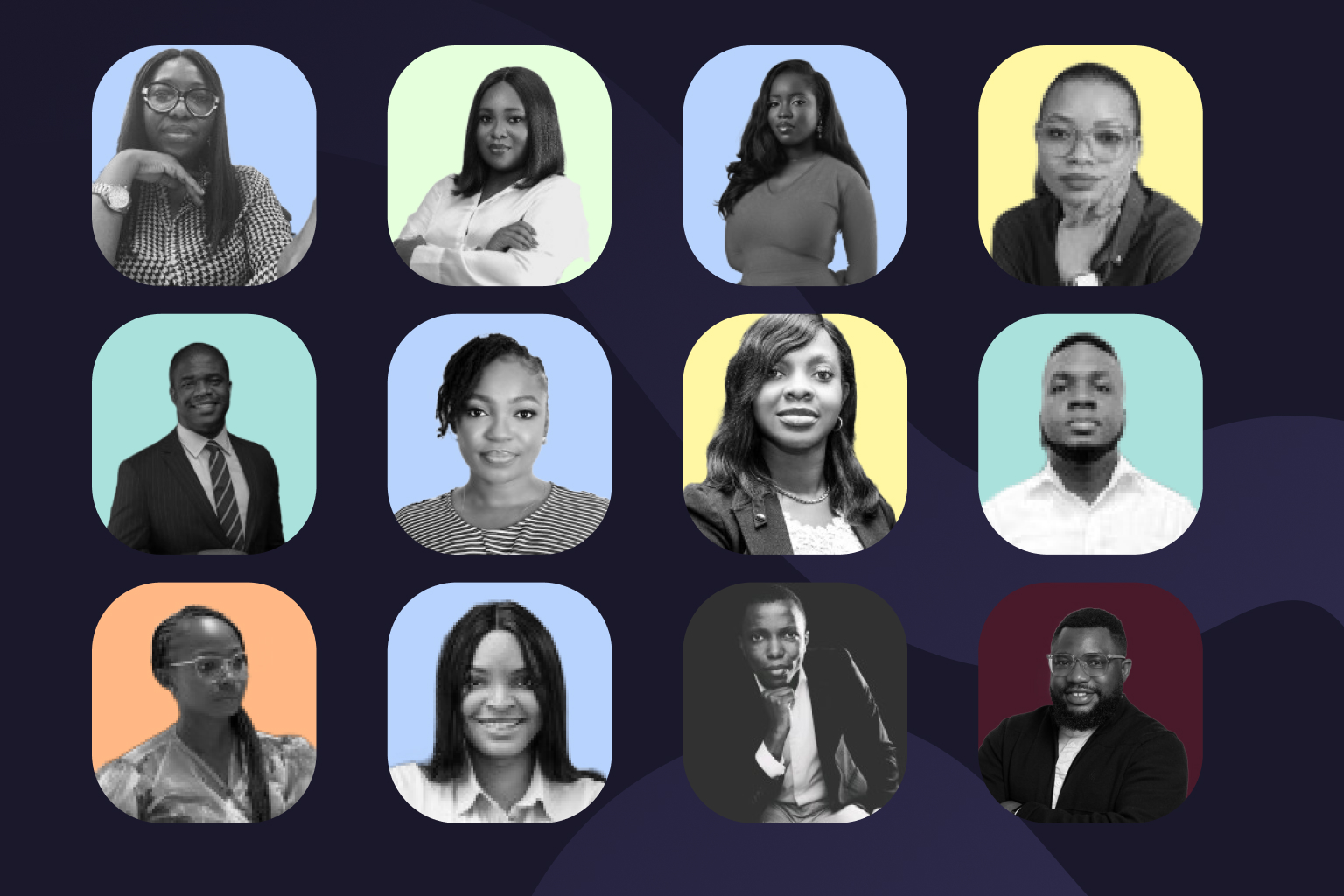
To understand how AI is changing the HR landscape in Nigeria, I spoke to 12 HR professionals in companies that leverage technology, from budding startups to large enterprises. Their perspectives reveal that while AI is already influencing day-to-day HR work, adoption is uneven.
Here’s what I found across five critical HR functions: employee engagement, learning & development, performance management, compensation & benefits, and recruitment & retention.
If your organization is looking to use AI more effectively, Talstack offers practical, AI-focused courses designed for all teams. Schedule a demo today to see how these courses can support your organization.
Employee Engagement
Employee engagement is one of the areas where AI adoption is least advanced. HR leaders mostly reach for chatbots like like ChatGPT and Gemini for smaller tasks like refining survey questions or structuring engagement activities, rather than anything that touches strategy or decision-making.
“I use ChatGPT to turn rough ideas into structured engagement activities. It doesn’t replace the work, but it makes me sharper and faster.”
→ Daisy Ekekwe, HR Manager at Livestock Feeds Plc
“I use ChatGPT Plus for personal tasks and Copilot for work. These tools make me much faster across routine employee engagement activities.”
→ Sandra Dunkwu, Group Culture Officer at Access Bank
Others highlighted using AI to phrase poll questions, ensuring survey responses are measurable and clear.
“I used Gemini to refine our employee engagement strategies and to phrase survey questions so the data received is easy to analyze.”
→ Chiazagom Anisiebo, Human Resource Business Partner at Moniepoint
Only a few leaders mentioned using AI for deeper engagement analysis. Many also admitted that survey data is still analyzed manually despite knowing AI could support this process.
Learning & Development
This is one area where AI is making real progress. HR leaders frequently use AI chatbots to brainstorm training ideas, analyze engagement and performance data to identify skill gaps, and create curricula. Tools like Gemini and ChatGPT are often used in collaboration with Gamma (slide design and presentation tool) to create simple training material, especially for cross-functional skills.
“I use Gemini to analyze performance data, identify learning objectives, and outline curricula. It saves hours of work.”
→ Aderemi Fakunmoju, Director, Business Services at Artezia Traffic Solutions
Beyond chatbots, AI integrations within learning platforms are becoming more common. Companies reported using AI features on learning platforms for in-platform recommendations.
“We use AI-powered learning platforms to recommend personalized learning paths for our entry-level staff.”
→ Freda-McCarthy Okosodo, Head of People at Mono
Still, a recurring theme was the local context gap. Most AI tools are trained on U.S. or European datasets, which means their learning recommendations often miss the nuances of Nigerian workplaces. HR leaders find themselves constantly reworking outputs to fit local realities, highlighting the need for solutions built with local contexts.
Performance Management
AI has proven to be supportive in performance management. It is being used to draft KPIs from company strategy, refine the wording of performance review questions, and analyze responses. Microsoft Copilot, for example, is popular for generating insights from review responses. A few organizations with access to AI-enabled performance management platforms reported stronger adoption across their performance management processes.
“The most useful thing for me has been AI suggestions during performance conversations. It helps managers prepare better.”
→ Freda-McCarthy Okosodo, Head of People at Mono
Compensation & Benefits
Compensation is the HR area where AI adoption is weakest. Where it's used at all, it plays a small, supporting role rather than being trusted for anything important.
Many HR leaders admitted they’ve tested ChatGPT or Gemini for salary benchmarking. It’s a free alternative to traditional remuneration surveys from large consulting firms, offering quick ballpark figures for market ranges.
“AI gives me a baseline view before I cross-check with survey data.”
→ Daisy Ekekwe, HR Manager at Livestock Feeds Plc
But most HR leaders are quick to acknowledge the limitations. Market-wide Nigerian salary data isn’t easily available, and AI often produces ranges that are too broad or outdated. As a result, HR leaders still rely more on informal HR networks or paid surveys from consulting firms.
“I have used Gemini for quick salary benchmarking, but I always cross-check with my HR network to validate what the tool suggests.”
→ Beleetela Mark, Senior Human Resources Manager - Talent Management & Development at ORÍKÌ Group
AI-powered HR tools have not meaningfully disrupted compensation benchmarking, largely because they lack access to local remuneration data.
However, for HR leaders that have had to recruit outside Nigeria and needed international salary benchmarks, AI tools have proven especially useful.
“I often have to hire engineering talent from outside the country, and I’ve used ChatGPT many times to figure out what a good benchmark is for those hires.”
→ Yetunde Caxton-Martins, Head - People and Operations at Pastel
One encouraging note: two HR leaders reported using AI chatbots to design custom benefits packages based on data collected from engagement surveys.
Recruitment & Retention
Of all five areas, recruitment is where AI is most consistently applied. HR leaders use chatbots like ChatGPT to draft job descriptions and generate interview questions, and AI-integrated ATS platforms handle CV screening and shortlisting, saving time in the sourcing stage.
“AI cut down my JD drafting time from hours to minutes. That’s where it really shows its value.”
→ Yetunde Akintoye, Group Head Human Resources at Veritasi Homes
"AI helps us filter CVs and construct job descriptions. It’s not perfect, but it saves us significant time.”
→ Taiwo Shobowale, Human Resource Business Partner at Netcom Africa
Other HR leaders mentioned using Gemini to analyze candidate experience against job requirements, even suggesting discussion points for interviews. In some cases, HR leaders tested AI to rank technical assessments and reported positive results.
Retention, however, remains less developed. Only a few leaders reported AI driven analysis of performance reviews and surveys to flag disengaged employees or at-risk talent.
“Our AI-integrated HRIS platform flags disengaged employees and spots those who might be overlooked for promotions. That’s where it really adds value.”
→ Diseye Naasin, People and Culture Lead at Stears
AI Usage Policy and Data Privacy
A recurring concern across the interviews was the absence of a clear AI policy. Most HR leaders said their companies already follow NDPR or GDPR standards for data protection, but few had anything specific to AI usage. Some organizations are working to add AI clauses to their existing frameworks, though this is still early.
Resume screening bias, privacy risks, and data accuracy issues all remain areas of caution. However, leaders are not panicked, and see these as manageable issues rather than reasons to avoid using AI altogether.
If your organization doesn’t yet have an AI usage policy and you’d like a starting point, we’ve prepared a draft AI Usage Policy Template that you can adapt to your context. Download the template here.
How AI is Transforming HR in Nigeria: Key Takeaways
From these conversations, four themes emerge clearly:
- AI is a helper, not a replacement. HR leaders see AI as an assistant that makes them faster and sharper, but not a substitute for core HR judgment.
“AI tools amplify competence rather than create it. It helps strong teams do their work faster and better.”
→ Gbenga Totoyi, Partner at Alan & Grant.
“AI is here to enhance HR roles rather than replace them. It frees us from repetitive tasks so we can focus more on strategy."
→ Sandra Oyugbo, Head, People & Culture at Black Pelican Limited
- Adoption is uneven. Recruitment and L&D show the strongest uptake; engagement and performance are patchy, and compensation and benefits remain largely experimental.
- Local context is missing. Most AI tools are trained on international datasets, meaning their recommendations often fail to reflect Nigerian realities. HR leaders frequently have to rework outputs to fit their own context, underscoring the need for solutions built on local data.
- ChatGPT leads adoption. Among AI chatbots, ChatGPT remains the most widely used. Gemini and Copilot are gaining ground too, mostly because they arrive built into the software(Google Workspace and Microsoft 365) that companies already use, rather than requiring a separate subscription. But ChatGPT still leads, thanks to a combination of early mover advantage, familiarity, and versatility.
"ChatGPT is still my go-to Ai chatbot. Even though we have access to other tools, ChatGPT is the one I end up using the most because I'm just used to it.”
→ Sandra Oyugbo, Head, People & Culture at Black Pelican Limited
Overall, the outlook is optimistic. HR leaders are experimenting, learning, and adapting. AI is making HR work easier, and its future potential, especially in predictive analytics and retention, is significant.






.webp)